 vegochef.com/guides/mediterranean-diet/
The Mediterranean diet: what to eat and how to start
 By the Vegochef team · Editorial standards · Last checked · 10 min read
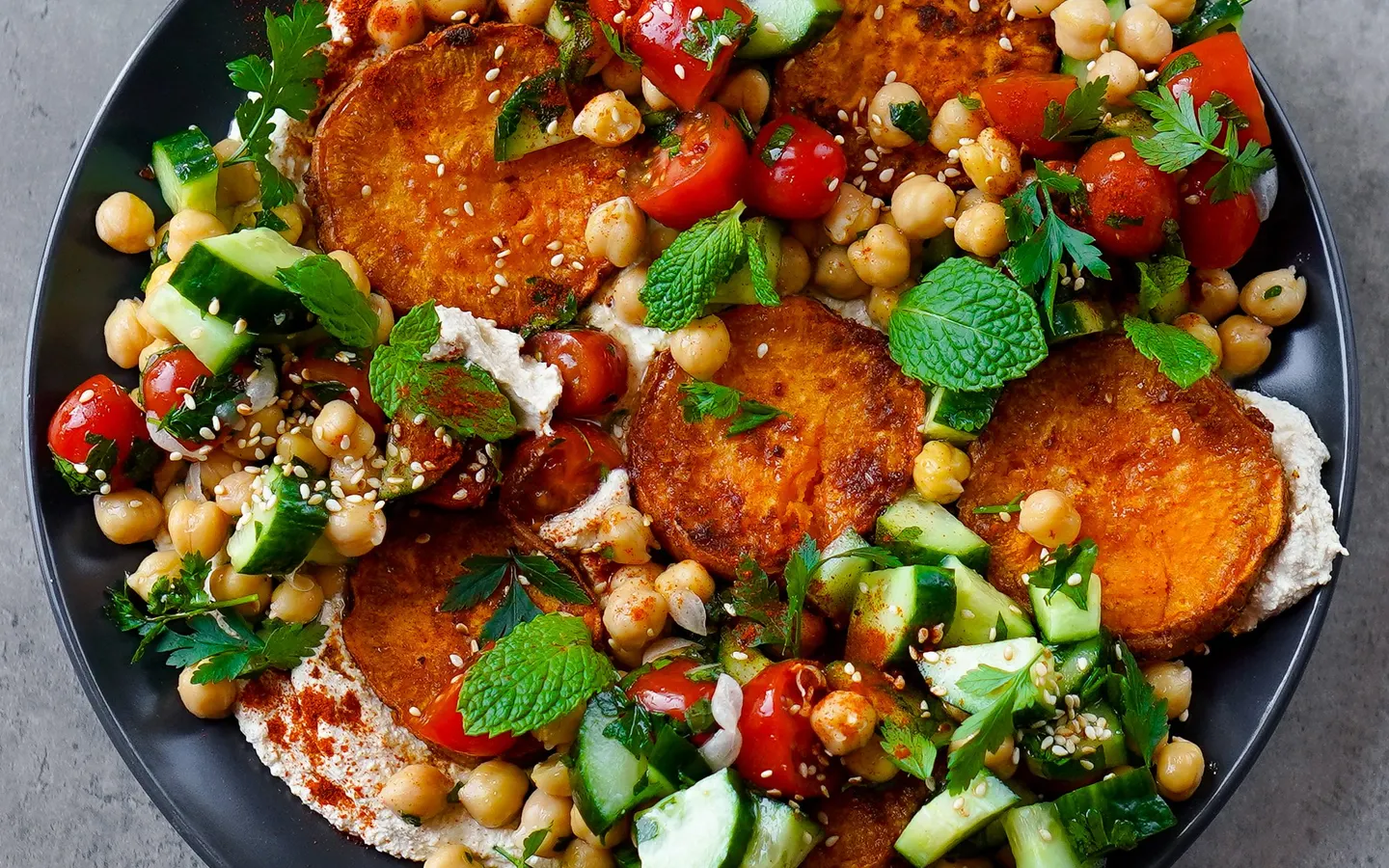
The Mediterranean diet isn't a strict diet with rules and points. It's a way of eating that people in Greece, southern Italy, Spain, Lebanon and their neighbours have followed for generations: lots of plants, olive oil instead of butter, simple dishes and meals shared at the table. Health organisations rate it among the best eating patterns there is. Here's how it works, how to follow it fully plant-based, and a free 7-day meal plan to get you started.
What is the Mediterranean diet?
It's based on the traditional food of countries bordering the Mediterranean Sea, as people ate in the 1950s and 1960s. Researchers became interested when the Seven Countries Study, led by Ancel Keys, found far less heart disease in places like Crete and southern Italy than in the US and northern Europe. Since 2013, UNESCO has recognised the Mediterranean diet as part of the world's intangible cultural heritage.
What people ate back then was mostly plant-based, mainly because plants were what they had:
- Every day: vegetables, fruit, bread and other whole grains, beans and lentils, olive oil, nuts, herbs.
- Regularly: cheese and yogurt, often from sheep or goats, and eggs.
- Rarely: meat was traditionally eaten on special occasions and holidays, not every day. In coastal areas, fish was eaten more often.
- Sweets: fruit was the usual dessert; cakes and pastries were for celebrations.
"I remember my grandparents' generation, they would eat meat like once a month."
In Spain today, he added, many people eat meat several times a day, and he's clear about why:
"This is basically marketing from the industry. It's all it is."
In Spain, Enric said, the traditional Mediterranean diet was mostly grains, legumes and pulses; today many people picture it as meat, fish and cheese, an image he also puts down to marketing. Across the Mediterranean, diets have moved a long way from the traditional pattern, towards more meat and processed food.
That's why the Mediterranean diet is so easy to follow as a vegetarian or vegan: you're simply going back to what it was built on.
The Mediterranean diet pyramid (2008 version)
This is the Oldways Mediterranean diet pyramid as updated in 2008. The first version was developed in 1993 by the Oldways foundation with the Harvard School of Public Health and the World Health Organization's European office. Water is the everyday drink, with wine in moderation as an option.
How the pyramid changed: 1993 vs 2008
| Original pyramid (1993) | Updated pyramid (2008, shown above) | |
|---|---|---|
| Red meat | Its own level at the very top: a few times per month, or somewhat more often in very small amounts | Grouped with sweets: less often |
| Fish and seafood | Low to moderate amounts, alongside poultry | Its own level: often, at least twice a week |
| Plant foods | Several separate daily groups | One big base group: base every meal on these |
| Herbs and spices | Not shown | Added to the base |
The 2008 update, for the pyramid's 15th anniversary, moved fish up because of research on omega-3 fats. Red meat stayed at the top in both versions, and Oldways today describes red meat and sweets as rarely eaten. In other words, the original pyramid matches what Enric's grandparents ate: meat a few times a month at most.
The base of the pyramid, the foods to eat at every meal, is entirely plant-based. To eat the vegetarian or vegan way, keep that base and simply leave out the levels you don't eat. Our 7-day meal plan is vegetarian, with a vegan swap for every meal.
What to eat: the food list
| Eat every day | Eat a few times a week | Eat occasionally |
|---|---|---|
| Vegetables: tomatoes, peppers, eggplant, courgette, leafy greens, onions, garlic | Greek yogurt or soy yogurt | Cakes, pastries and sweets |
| Fruit: citrus, grapes, figs, berries, melon | Cheese: feta, halloumi, mozzarella (check the rennet) | Sugary drinks |
| Whole grains: wholegrain bread, bulgur, farro, barley, wholewheat pasta, oats | Eggs | Highly processed snacks |
| Legumes: lentils, chickpeas, white beans, fava beans | Tofu and tempeh (modern plant extras) | Butter and cream |
| Nuts and seeds: walnuts, almonds, pine nuts, sesame (tahini) | ||
| Extra virgin olive oil, olives | ||
| Herbs and spices: oregano, basil, parsley, mint, cumin |
How much? A simple daily guide
| Food | How much | One serving is about |
|---|---|---|
| Vegetables | 4 or more servings a day | 1 cup raw, ½ cup cooked, or 2 cups leafy greens |
| Fruit | 2–3 servings a day | 1 medium piece or 1 cup chopped |
| Whole grains | 3–6 servings a day | 1 slice of bread, ½ cup cooked pasta, rice or bulgur |
| Legumes | At least 3 times a week, ideally daily | ½ cup cooked beans, lentils or chickpeas |
| Nuts and seeds | At least 3–4 times a week | A small handful (about 30 g) |
| Extra virgin olive oil | Your main fat, every day | Use it for cooking, dressing and on bread |
These amounts are adapted from Mayo Clinic's and the PREDIMED study's guidance. Portions depend on your size and activity: use the calorie (TDEE) calculator for your own target.
What the research shows, honestly
- Heart health: the strongest evidence. The PREDIMED trial in Spain followed about 7,400 people at high risk of heart disease. Those eating a Mediterranean diet with extra olive oil or nuts had roughly 30% fewer heart attacks, strokes and heart-related deaths than a low-fat control group. (The study was re-analysed and republished in 2018 after problems with how some participants were assigned; the main finding held.)
- Type 2 diabetes: studies link the diet with a lower risk and better blood sugar control.
- Brain health and ageing: observational studies link it with slower cognitive decline, but these show associations, not proof of cause.
- Weight: it's filling and helps many people manage weight, but it's not automatically low in calories; olive oil and nuts are energy-dense.
The limits: much of the evidence comes from observational studies, which can't fully separate diet from other habits. The one large trial, PREDIMED, studied older Spanish adults at high risk. Still, the overall picture across decades of research is consistent and positive.
Wine: optional
Many descriptions include a glass of red wine with meals. You don't need it. Health organisations advise against starting to drink for health reasons, and the diet's benefits come mainly from the food.
The plant-based Mediterranean diet
Going vegetarian or vegan changes very little, but keep an eye on a few nutrients:
- Protein: easy with legumes at most meals, plus yogurt, cheese and eggs (vegetarian) or tofu and soy yogurt (vegan). See high-protein meals.
- Omega-3: the traditional diet got some from fish. Walnuts, ground flaxseed and chia give you ALA; an algae oil supplement gives EPA and DHA. See vegan omega-3.
- Vitamin B12: vegans need a supplement or fortified foods; vegetarians get some from eggs and dairy. See what supplements vegans need.
- Iron and calcium: legumes, greens, tahini and calcium-set tofu help; eat iron-rich foods with lemon or tomatoes.
A taste of the region: plant-based classics
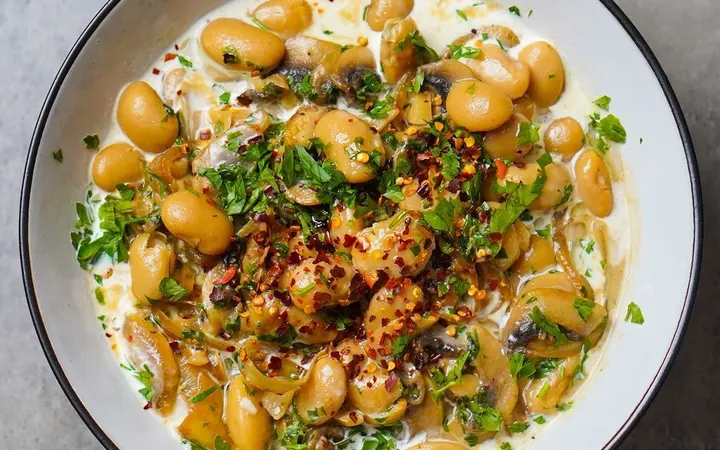
- Greece: horiatiki (village salad), gigantes (baked butter beans), fasolada (bean soup), spanakopita.
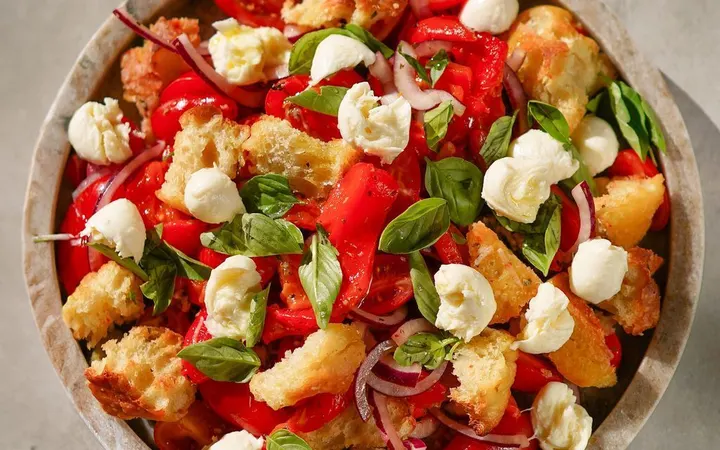
- Italy: pasta e fagioli, minestrone, panzanella, pesto, caponata.
- Spain: gazpacho, pisto, chickpeas with spinach.
- Lebanon and the Levant: hummus, tabbouleh, fattoush, mujaddara (lentils and rice), falafel.
- Turkey: mercimek (red lentil soup), imam bayildi (stuffed eggplant).
- Morocco and North Africa: vegetable tagine, harira-style lentil and chickpea soup, shakshuka.
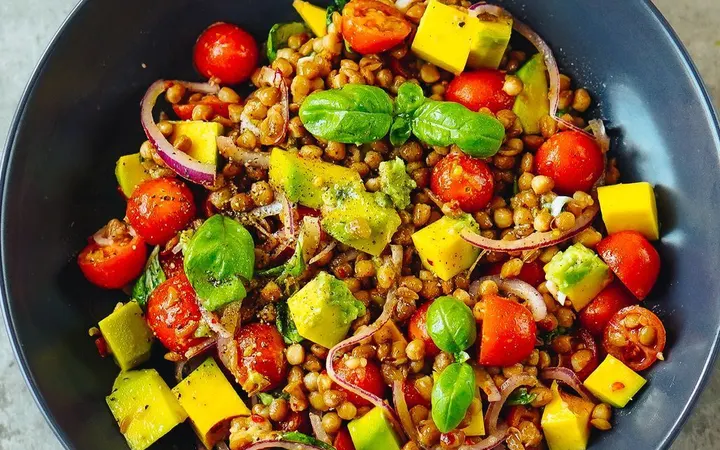
Our versions to try:
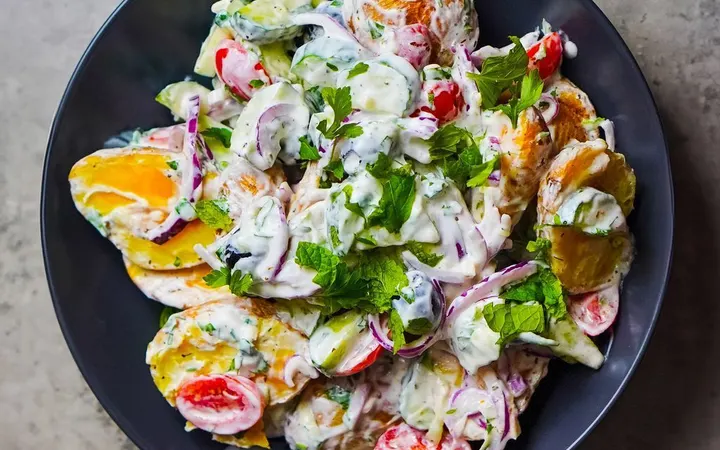
How to start in 7 steps
- Switch to extra virgin olive oil for cooking and dressings instead of butter.
- Add a legume a day: chickpeas in a salad, lentils in a soup, white beans with pasta.
- Make vegetables half your plate at lunch and dinner.
- Swap refined grains for whole ones: wholegrain bread, bulgur, farro, wholewheat pasta.
- Snack on nuts, fruit and hummus instead of biscuits and crisps.
- Cook simply with herbs, garlic and lemon, and use less salt.
- Sit down to eat, ideally with others. It's part of the diet, too.
Eating Mediterranean on a budget
Legumes, seasonal vegetables, oats and bulgur are some of the cheapest foods there are. Buy dried or canned beans and lentils, frozen vegetables and spinach, big bottles of olive oil, and nuts in bulk. Cook big pots of soup and stew and eat them twice.
Ready for a full week?
Our 7-day Mediterranean diet meal plan puts all of this on the table, with recipes, a grocery list and a printable PDF.
Frequently asked questions
What can you eat on the Mediterranean diet?
Plenty of vegetables, fruit, whole grains, beans, lentils, chickpeas, nuts, seeds, olive oil, herbs and spices every day, plus moderate amounts of yogurt, cheese and eggs if you eat them. Sweets are for occasionally.
Can vegetarians and vegans follow the Mediterranean diet?
Yes. The diet is already mostly plant-based. Vegetarians keep the yogurt, cheese and eggs; vegans use legumes, tofu, soy yogurt and nuts instead, and take vitamin B12.
Is pasta allowed on the Mediterranean diet?
Yes. Pasta is a traditional Mediterranean food. Choose wholewheat when you can, keep portions moderate and pair it with vegetables, beans and olive oil.
Is bread allowed on the Mediterranean diet?
Yes. Wholegrain and sourdough bread are part of the diet, often eaten with olive oil instead of butter.
Is the Mediterranean diet good for weight loss?
It can be, because it's filling and high in fibre, but olive oil and nuts are calorie-dense, so portions still matter. Use the calorie deficit calculator if you want a target.
Is the Mediterranean diet good for diabetes?
Studies link it with better blood sugar control and a lower risk of type 2 diabetes. If you have diabetes, talk to your doctor or dietitian about how to adapt it.
Do you have to drink wine on the Mediterranean diet?
No. Many versions include a small glass of wine with meals, but health organisations advise not to start drinking for health reasons. The diet works without alcohol.
How is the Mediterranean diet different from the DASH diet?
They're similar: both are rich in vegetables, fruit, whole grains and legumes. DASH focuses specifically on lowering blood pressure and limits salt; the Mediterranean diet is a traditional pattern centred on olive oil, with fewer rules.
Recipes to try
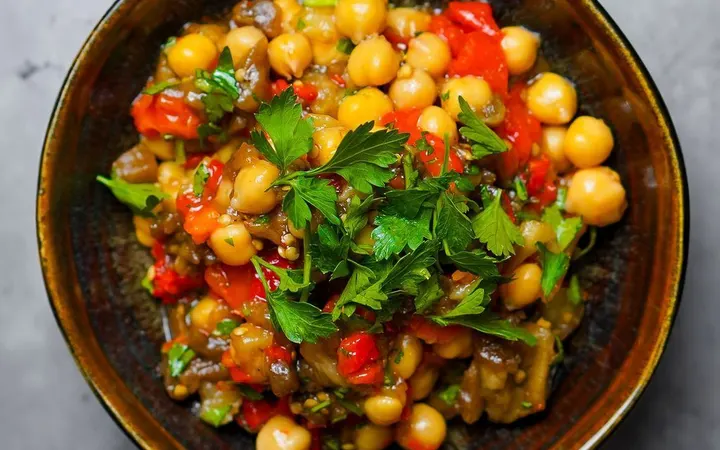
Related guides
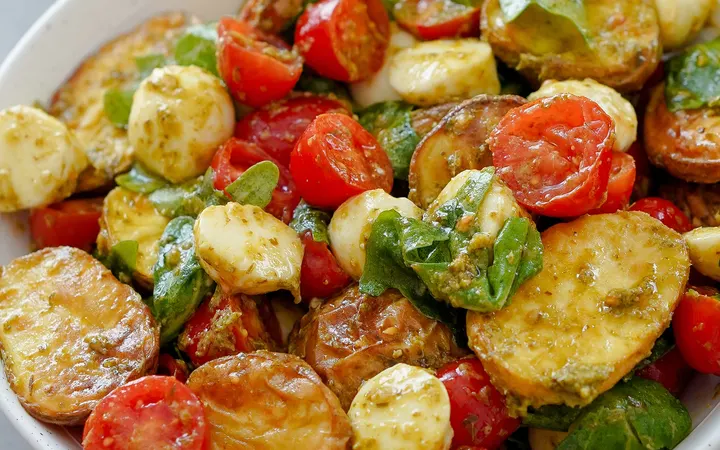


Plan your Mediterranean week
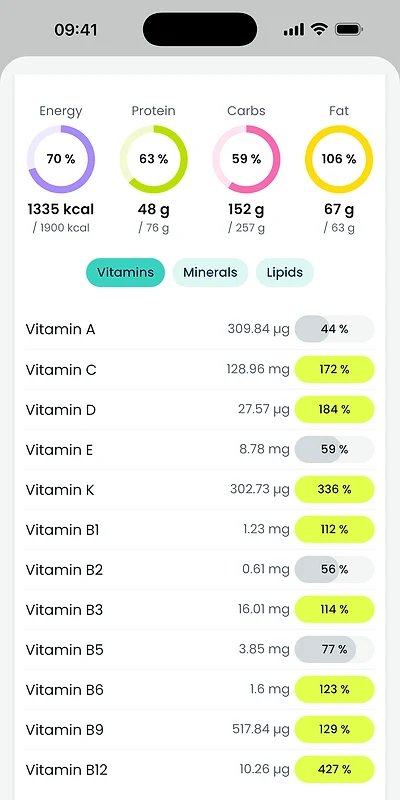
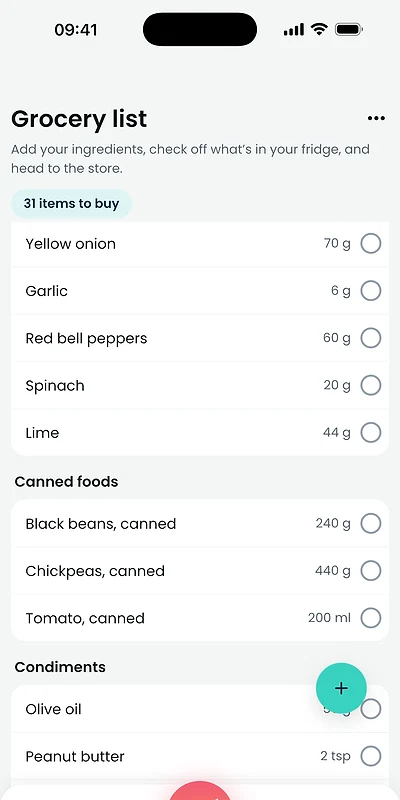
Choose vegetarian or vegan in Vegochef, plan Mediterranean-style meals from tested recipes, see 29 vitamins, minerals and lipids against your targets, and get your grocery list in one tap.
Try it free for 7 days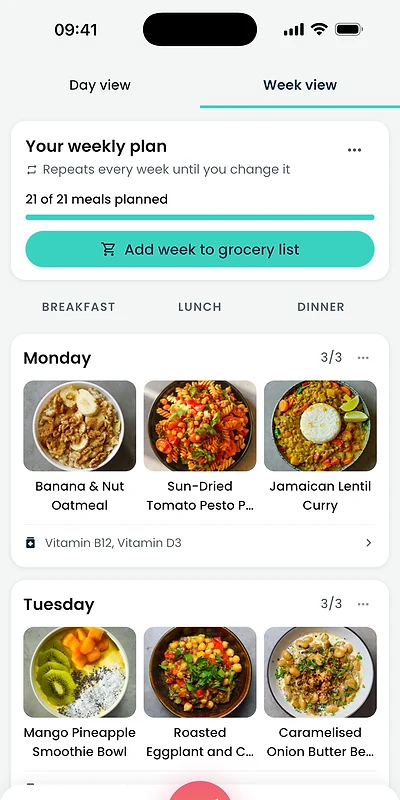
Sources
- Estruch R et al. Primary prevention of cardiovascular disease with a Mediterranean diet supplemented with extra-virgin olive oil or nuts (PREDIMED). New England Journal of Medicine, 2018.
- Keys A et al. Seven Countries Study: diet and coronary heart disease in seven countries (1970s–1980s).
- Willett WC et al. Mediterranean diet pyramid: a cultural model for healthy eating. American Journal of Clinical Nutrition, 1995.
- Oldways: Mediterranean diet pyramid, its 1993 introduction and 2008 update (oldwayspt.org)
- Smithsonian National Museum of American History: poster, Traditional Healthy Mediterranean Diet Pyramid, 1994
- Three decades of the Mediterranean diet pyramid: a narrative review of its history, evolution, and advances. American Journal of Clinical Nutrition, 2025.
- UNESCO: Mediterranean diet, inscribed on the Representative List of the Intangible Cultural Heritage of Humanity (2013).
- Dietary Guidelines for Americans 2020–2025: healthy Mediterranean-style eating pattern (dietaryguidelines.gov)
From vegochef.com: meal planner and nutrition tracker for vegans, vegetarians and pescatarians. Free for 7 days on the App Store.