 vegochef.com/guides/vegan-grocery-list/
Vegan grocery list for beginners
 By the Vegochef team · Editorial standards · Last checked · 6 min read
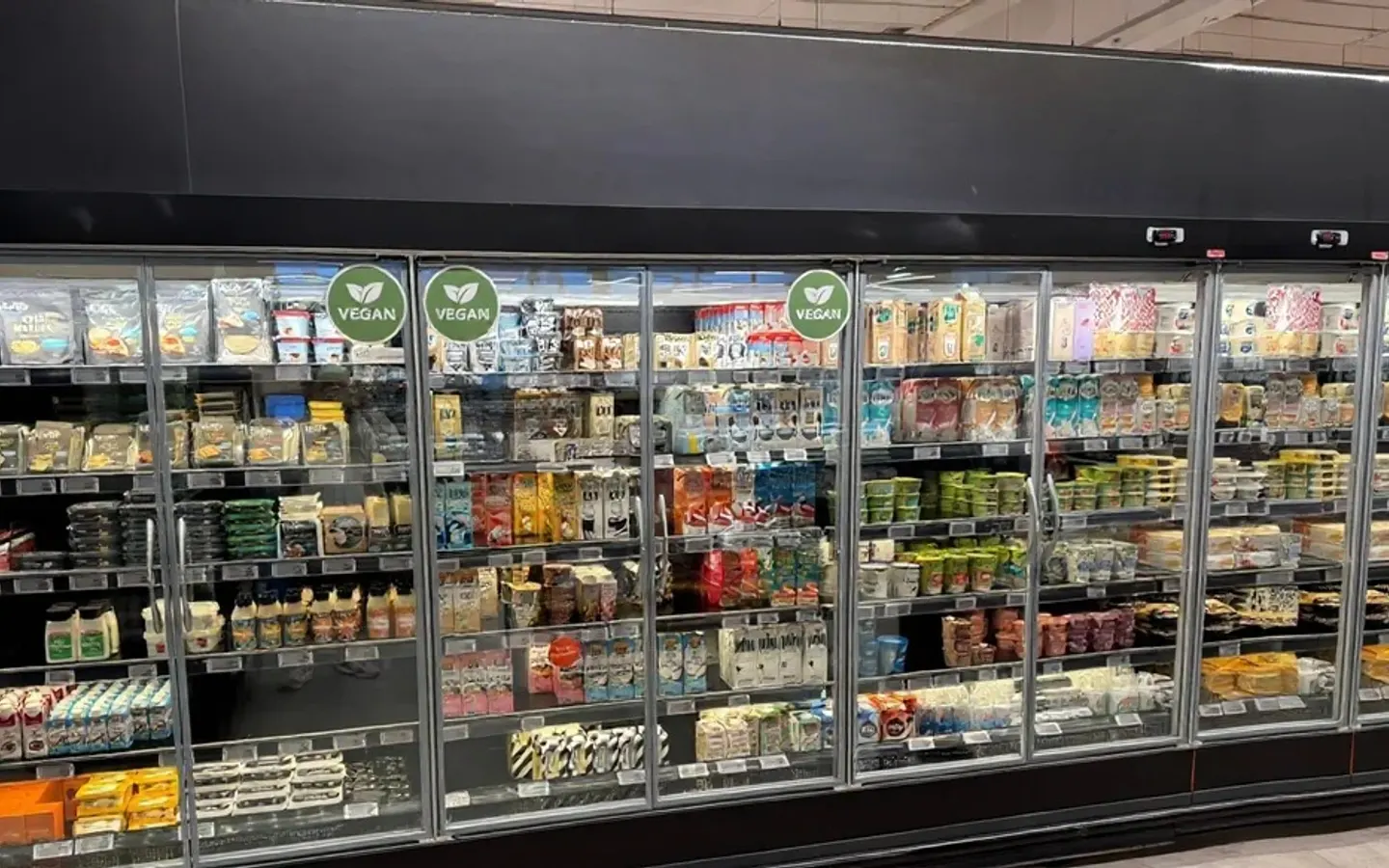
Going vegan doesn't mean shopping in a different store. Most of what you need is in any supermarket: it's mostly a matter of knowing which aisles to slow down in. This list covers the basics a beginner needs for a week of varied meals. In the UK you'd call it a shopping list; it works the same way.
The list, aisle by aisle
Vegetables and fruit
- Leafy greens: spinach, kale, rocket or mixed salad leaves
- Broccoli, cauliflower or cabbage
- Carrots, peppers, tomatoes, cucumber
- Onions, garlic, ginger
- Sweet potatoes or potatoes
- Mushrooms
- Bananas, apples, berries (fresh or frozen)
- Lemons or limes
- Fresh herbs such as coriander or parsley (optional)
Beans, lentils and peas
- Canned chickpeas, black beans and kidney beans
- Red and green or brown lentils (dried or canned)
- Frozen peas or edamame
Tofu, tempeh and other proteins
- Firm tofu (look for calcium-set: "calcium sulfate" on the label)
- Tempeh or seitan, if you like them
- Unsweetened soy yogurt
Grains and bread
- Oats
- Brown rice or quinoa
- Whole-wheat pasta
- Wholegrain bread or wraps
Nuts and seeds
- Peanut butter or another nut butter
- Walnuts or almonds
- Ground flaxseed, chia seeds or hemp seeds
- Pumpkin or sunflower seeds
Fortified foods
- Plant milk with added calcium, vitamin D and B12 (soy milk is highest in protein)
- Breakfast cereal with added B12
- Nutritional yeast with added B12
Pantry, sauces and spices
- Canned tomatoes and tomato paste
- Vegetable stock
- Olive oil and a neutral oil such as rapeseed (canola)
- Soy sauce or tamari
- Tahini
- Vinegar
- Spices: cumin, paprika, curry powder, chilli flakes, dried oregano
- Salt and black pepper
Freezer
- Frozen vegetables (mixed vegetables, spinach, stir-fry mix)
- Frozen fruit for smoothies and oats
- Frozen edamame or veggie burgers for busy days
Nutrients to shop for
A plant-based diet covers most nutrients easily. A few need a little attention, and the right shopping makes that simple:
- Vitamin B12: plants don't provide reliable amounts. Choose fortified foods (plant milk, cereal, nutritional yeast) or take a supplement. See vegan supplements.
- Calcium: calcium-set tofu and fortified plant milk are the easiest sources. Kale, broccoli and almonds help too.
- Iron: beans, lentils, tofu, oats and seeds are good sources. Eat them with vitamin C (peppers, tomatoes, citrus) to absorb more.
- Omega-3: ground flaxseed, chia, hemp seeds and walnuts give you ALA, the plant form of omega-3. More in our vegan omega-3 guide.
- Vitamin D: from sunlight and fortified plant milk. In northern countries many people need a supplement in winter. See vegan vitamin D.
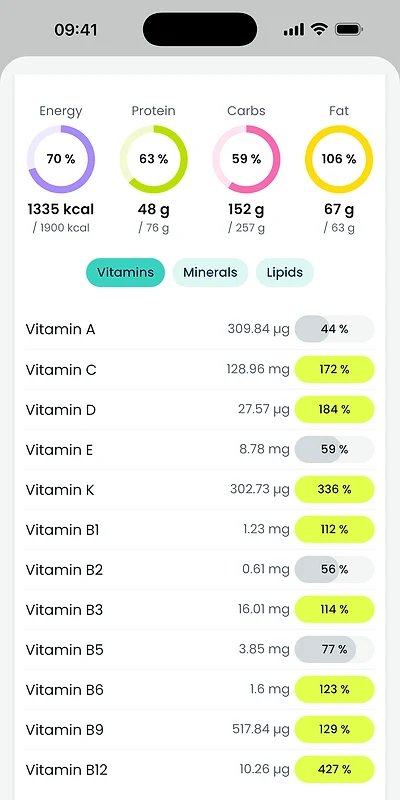
Not sure whether your food covers these? Plan a typical week in Vegochef and the nutrient tracker shows which nutrients fall short, before you buy a supplement.
How to shop on a budget
- Buy dried beans and lentils. They cost a fraction of canned ones; lentils don't even need soaking.
- Use frozen vegetables and fruit. They're just as nutritious, keep for months and cut waste.
- Choose store brands for oats, rice, pasta, canned tomatoes and plant milk.
- Buy nuts and seeds in bulk and keep them in the freezer so they stay fresh.
- Cook once, eat twice. A big pot of chilli or curry covers several lunches.
Turn the list into a week of meals
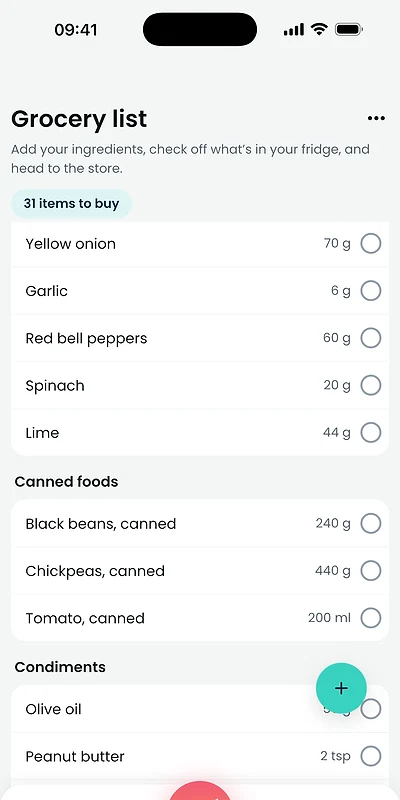
A list works best when it comes from a plan. Pick three or four recipes for the week, check what's already in your fridge, and only buy what's missing. Our vegan meal prep guide shows how to cook a week's worth in about two hours, and the grocery list in Vegochef adds up the amounts across recipes for you.
Frequently asked questions
How do I grocery shop as a vegan?
Shop from a plan: pick three or four recipes for the week, check what you already have, and buy only what's missing. Spend most of your time in the produce, beans and grains aisles, and read labels on processed foods for milk, egg, honey or gelatin.
Is a vegan diet expensive?
It doesn't have to be. Beans, lentils, oats, rice, frozen vegetables and seasonal produce are some of the cheapest foods in the store. Costs go up mainly with ready-made meat substitutes and specialty products.
What should vegans always have at home?
Canned beans and lentils, a whole grain such as oats or rice, tofu, frozen vegetables, nuts or nut butter, fortified plant milk, canned tomatoes and a few spices. With these you can make a meal on any day.
Recipes to try
Related guides


Let your meal plan write the list
Plan your week in Vegochef and send it to your grocery list in one tap. Amounts add up across recipes and items are sorted by aisle.
Try it free for 7 days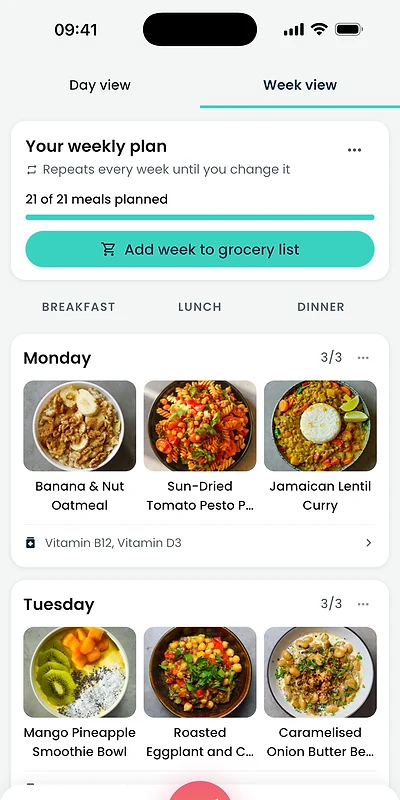
Sources
- NIH Office of Dietary Supplements: fact sheets for vitamin B12, calcium, iron and omega-3 (ods.od.nih.gov)
- The Vegan Society: nutrition overview and vitamin B12 guidance (vegansociety.com)
- Dietary Guidelines for Americans 2020–2025: vegetarian eating pattern (dietaryguidelines.gov)
From vegochef.com: meal planner and nutrition tracker for vegans, vegetarians and pescatarians. Free for 7 days on the App Store.