Protein calculator: how much protein do you need?
See how many grams of protein to eat each day for your weight and goal, how much per meal, and what that looks like on your plate. It updates as you type.
How much protein do you need?
The official minimum for healthy adults is 0.8 g of protein per kilogram of body weight a day (the Recommended Dietary Allowance from the US National Academies of Medicine). That covers the needs of almost everyone who isn't very active. Many people benefit from more:
| Situation | Protein per kg body weight a day |
|---|---|
| Minimum for healthy adults | 0.8 g |
| Adults over 65 | 1.0–1.2 g |
| Maintaining weight, active (Vegochef default) | 1.2 g |
| Gaining weight (Vegochef default) | 1.4 g |
| Losing weight (Vegochef default) | 1.6 g |
| Building muscle, strength training | 1.4–2.0 g (Vegochef default 1.8 g) |
| Pregnancy | 1.1 g, ask your midwife or doctor |
The calculator uses the same targets per goal as the Vegochef app. It also shows your minimum, so you can see the range between what you need and what helps your goal.
Per pound, per kilogram
US guidance is often given per pound: 0.8 g per kg is 0.36 g per pound, 1.6 g per kg is about 0.73 g per pound. The calculator converts for you when you choose US units.
Spread it over the day
Your body uses protein best in portions of about 20–40 g per meal, rather than one big serving at dinner. Three meals and a snack is an easy pattern. Breakfast is where most people fall short: Greek or soy yogurt, eggs, tofu scramble or oats made with soy milk all help.
Protein in everyday foods
Approximate values from USDA FoodData Central. Check labels for exact numbers.
| Food | Serving | Protein |
|---|---|---|
| Seitan | 100 g | 20–25 g |
| Tempeh | 100 g | 20 g |
| Lentils, cooked | 1 cup (198 g) | 18 g |
| Edamame, cooked | 1 cup (155 g) | 18 g |
| Greek yogurt (plain, non-fat) | 170 g pot | 17 g |
| Firm tofu | 100 g | 15 g |
| Chickpeas, cooked | 1 cup (164 g) | 15 g |
| Eggs | 2 large | 13 g |
| Soy milk | 1 cup (240 ml) | 7–8 g |
| Peanut butter | 2 tbsp (32 g) | 7 g |
More detail: protein in lentils, chickpeas and seitan. Meal ideas: high-protein vegan meals and high-protein vegetarian meals.
Protein on a plant-based diet
You don't need meat to reach your target. Soy foods (tofu, tempeh, edamame, soy milk) and seitan are the most protein-dense plant foods; lentils, beans and chickpeas add fibre and iron too. Plant proteins don't need to be combined in the same meal: a mix of legumes, grains, nuts and seeds over the day gives you every essential amino acid. Vegetarians can add eggs, Greek yogurt and cottage cheese, among the easiest high-protein foods there are.
Frequently asked questions
How much protein do I need a day?
Healthy adults need at least 0.8 g of protein per kilogram of body weight a day: about 56 g for a 70 kg (154 lb) person. If you exercise a lot, want to build muscle, are losing weight or are over 65, aiming for 1.2–1.8 g per kg is common.
How much protein do I need to build muscle?
Sports nutrition research suggests 1.4–2.0 g per kg of body weight a day for people who strength train, spread over meals of about 20–40 g. This calculator uses 1.8 g per kg for 'Build muscle'.
How much protein should I eat to lose weight?
More than usual helps you keep muscle and feel full while eating fewer calories. This calculator uses 1.6 g per kg of body weight for weight loss.
Can you eat too much protein?
For healthy adults, intakes up to about 2 g per kg a day are considered safe. People with kidney disease should follow their doctor's advice, as they may need less.
How much protein is in a meal?
Divide your daily target by your number of meals. Most people do well with 20–40 g per meal. On a plant-based diet, that's for example a cup of cooked lentils with a slice of tofu, or Greek yogurt with seeds and oats.
Do vegans and vegetarians need more protein?
The targets are the same. Some experts suggest vegans aim about 10% higher, because some plant proteins are digested a little less well. Eating a variety of legumes, soy, grains, nuts and seeds over the day covers all essential amino acids.
Hit your protein with plant-based meals
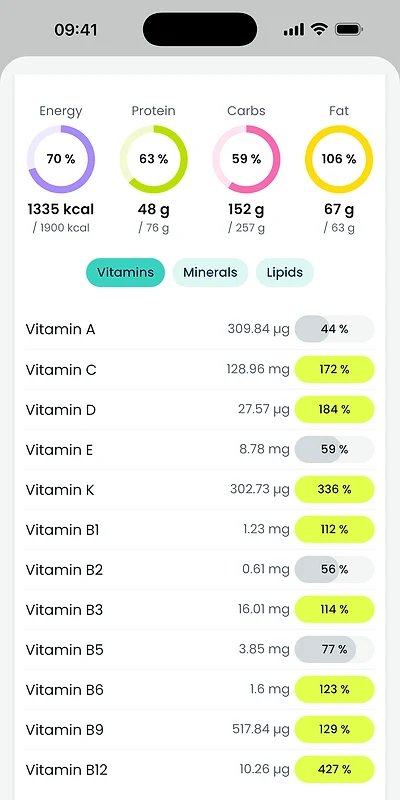
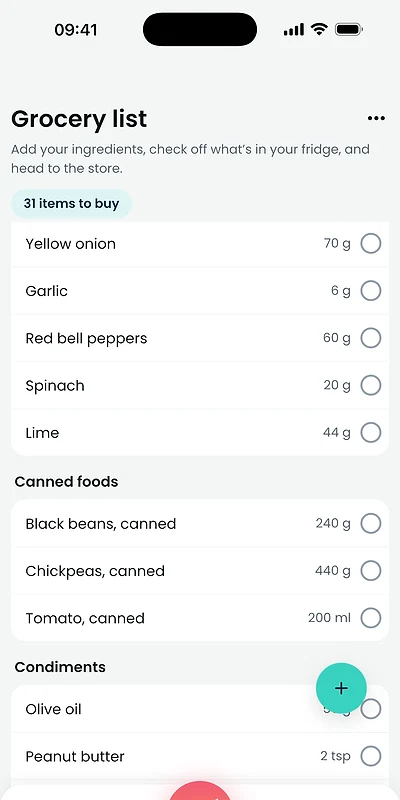
Vegochef plans your week around your protein target and shows how close each day gets, next to 29 vitamins, minerals and lipids.
Try it free for 7 days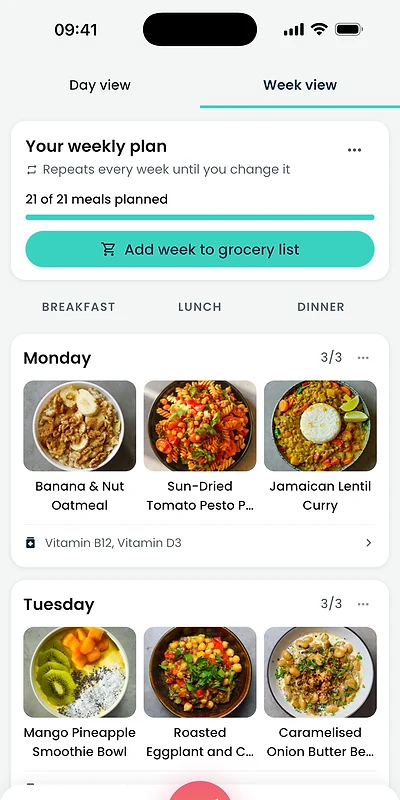
Sources
- National Academies of Medicine: Dietary Reference Intakes for protein and amino acids (RDA 0.8 g/kg; pregnancy 1.1 g/kg).
- Jäger R et al. International Society of Sports Nutrition position stand: protein and exercise. Journal of the International Society of Sports Nutrition, 2017.
- Bauer J et al. Evidence-based recommendations for optimal dietary protein intake in older people: PROT-AGE Study Group. Journal of the American Medical Directors Association, 2013.
- USDA FoodData Central: protein content of foods (fdc.nal.usda.gov).