Macro calculator: protein, carbs and fat for your goal
Find out how many grams of protein, carbs and fat to eat each day to lose weight, maintain, gain weight or build muscle. Use our default split or set your own. It updates as you type.
How the macro calculator works
- Calories. Your basal metabolic rate (BMR) from the Mifflin-St Jeor equation, times your activity factor, gives your maintenance calories (TDEE). For your goal it takes 20% off (lose weight) or adds 10% (gain weight or build muscle). More on this in the TDEE calculator.
- Protein is set from your body weight and goal, because that's what your muscles need, whatever your calories.
- Fat is 30% of calories, in the middle of the healthy range of 20–35%.
- Carbs get the rest.
It's the same calculation the Vegochef app uses when you set up your targets, and you can change the split in the app too.
Protein by goal
| Goal | Calories | Protein per kg body weight |
|---|---|---|
| Lose weight | TDEE − 20% | 1.6 g |
| Maintain | TDEE | 1.2 g |
| Gain weight | TDEE + 10% | 1.4 g |
| Build muscle | TDEE + 10% | 1.8 g |
Protein is kept between 15% and 40% of calories. Want a different number? See the protein calculator.
From percentages to grams
Protein: 4 kcal per gram
Carbohydrates: 4 kcal per gram
Fat: 9 kcal per gram
Example: on 1,850 kcal with 25% protein, 45% carbs and 30% fat, that's 1,850 × 0.25 ÷ 4 ≈ 116 g protein, 1,850 × 0.45 ÷ 4 ≈ 208 g carbs and 1,850 × 0.30 ÷ 9 ≈ 62 g fat.
Healthy ranges for adults
| Macro | Share of calories (US guidelines) |
|---|---|
| Protein | 10–35% |
| Carbohydrates | 45–65% |
| Fat | 20–35% |
When protein is high, for example for weight loss or building muscle, carbs can drop a little below 45%. That's common in sports nutrition and fine for most healthy adults.
Hitting your macros with plant-based food
- Protein: lentils, beans, chickpeas, tofu, tempeh, edamame, seitan, soy milk, and for vegetarians eggs, Greek yogurt and cottage cheese. See high-protein vegan meals and high-protein vegetarian meals.
- Carbs: oats, whole grains, potatoes, fruit, and the legumes above, which bring fibre too. Try our guide to cooking lentils.
- Fat: nuts, seeds, nut butters, avocado and olive oil. Walnuts, chia and ground flaxseed add plant omega-3.
Plant protein foods often come with carbs, so on a plant-based diet it's easier to reach your protein target by building every meal around one or two protein foods, rather than adding protein at the end of the day.
Frequently asked questions
What are macros?
Macros (macronutrients) are the three nutrients that give you energy: protein and carbohydrates with 4 kcal per gram, and fat with 9 kcal per gram. Counting macros means aiming for a number of grams of each, not just a calorie total.
What is a good macro ratio?
There's no single best ratio. US guidelines set healthy ranges for adults: 10–35% of calories from protein, 45–65% from carbs and 20–35% from fat. This calculator sets protein from your weight and goal, fat at 30%, and gives the rest to carbs.
What macros should I eat to lose weight?
Calories decide whether you lose weight; macros help you feel full and keep muscle. For weight loss, this calculator sets protein at 1.6 g per kg of body weight, fat at 30% and carbs for the rest, on 20% fewer calories than your TDEE.
How do I calculate my macros by hand?
Work out your calories (BMR × activity factor, adjusted for your goal). Multiply your weight in kg by your protein target (for example 1.6 g) and by 4 to get protein calories. Take 30% of calories for fat and divide by 9 for grams. The calories left are carbs: divide by 4.
Can you hit your macros on a vegan or vegetarian diet?
Yes. Lentils, beans, chickpeas, tofu, tempeh, edamame and seitan bring protein along with carbs and fibre, and nuts, seeds, avocado and olive oil cover fat. Vegetarians can add eggs, Greek yogurt and cottage cheese.
Do I need to count macros?
No. Many people do well with a calorie target and a protein target. Macros are useful if you train, want to build muscle or like more structure.
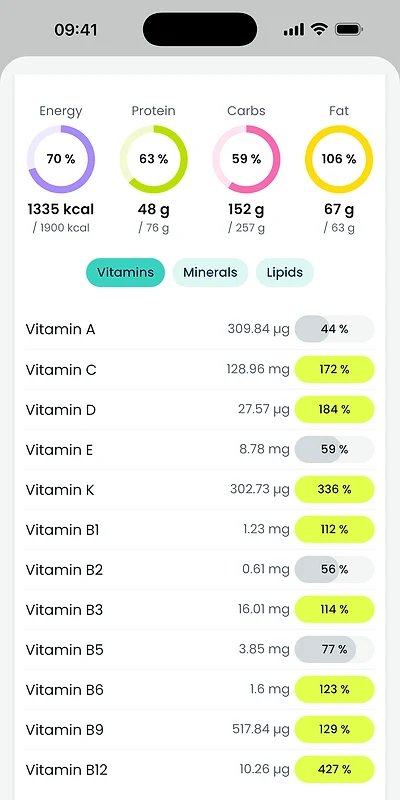
See your macros fill up, meal by meal
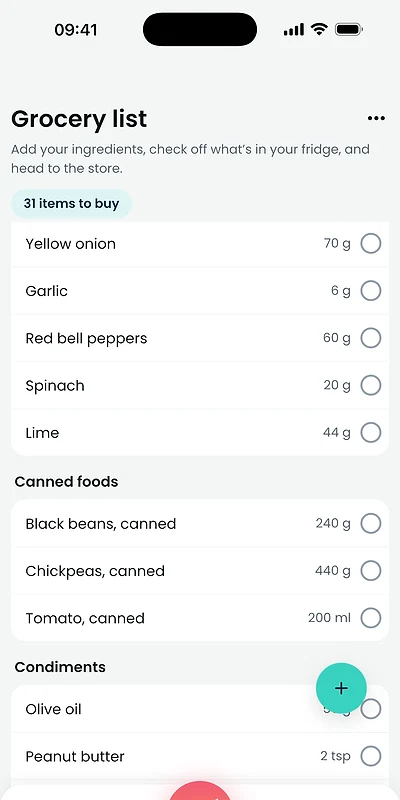
Vegochef plans plant-based meals around your calorie and macro targets, and tracks 29 vitamins, minerals and lipids alongside them.
Try it free for 7 days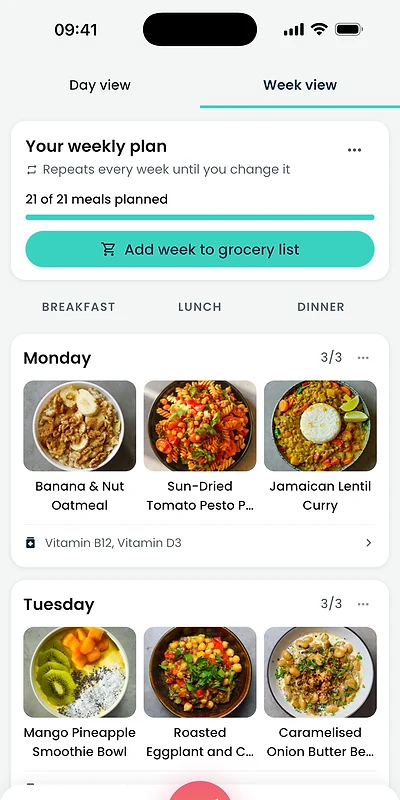
Sources
- National Academies of Medicine: Dietary Reference Intakes for energy, carbohydrate, fiber, fat, fatty acids, cholesterol, protein and amino acids (acceptable macronutrient distribution ranges).
- Jäger R et al. International Society of Sports Nutrition position stand: protein and exercise. Journal of the International Society of Sports Nutrition, 2017.
- Mifflin MD, St Jeor ST et al. A new predictive equation for resting energy expenditure in healthy individuals. American Journal of Clinical Nutrition, 1990.