 vegochef.com/guides/vegan-supplements/
What supplements do vegans need?
 By the Vegochef team · Editorial standards · Last checked · 7 min read
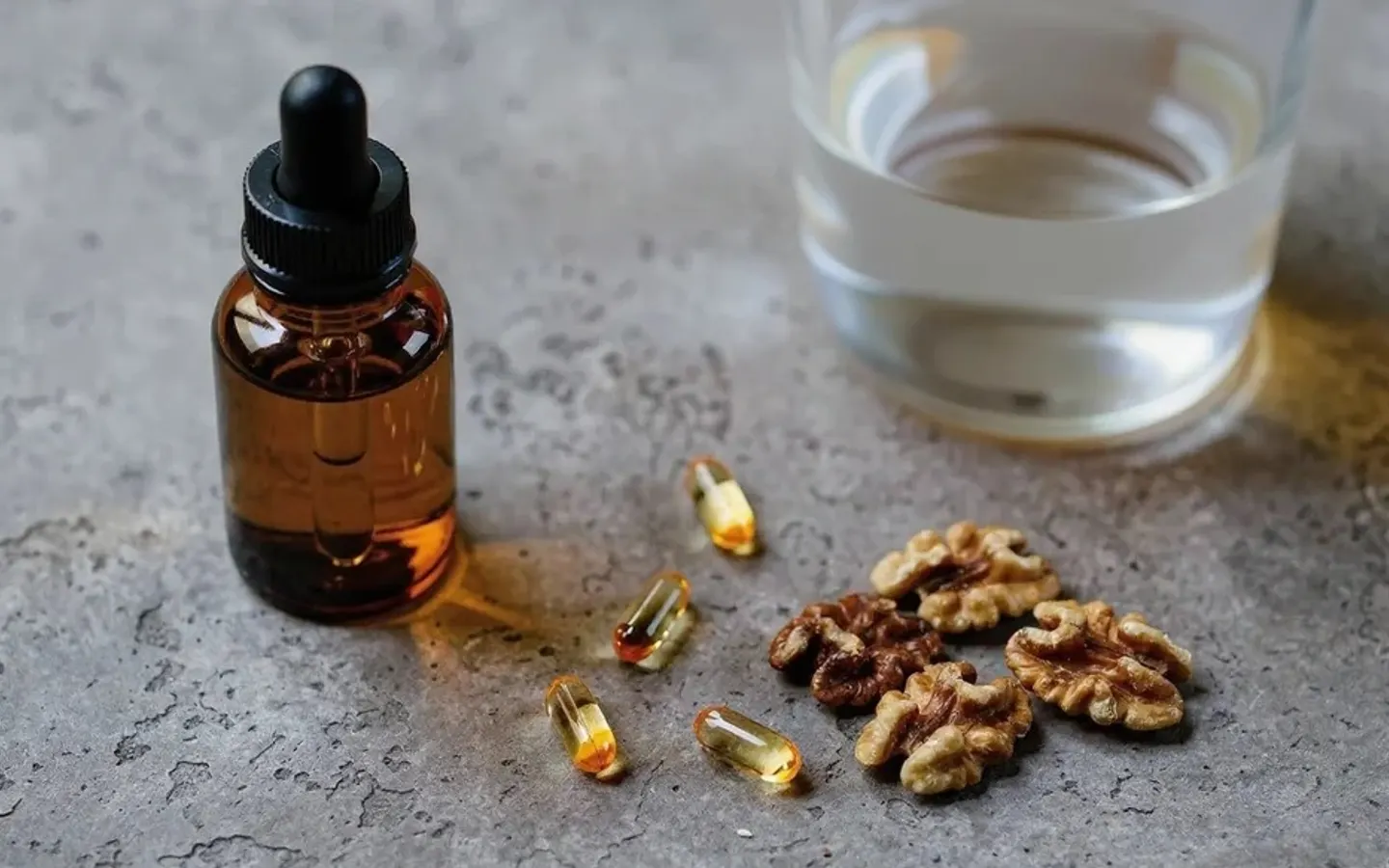
Walk into any health store and you'll find shelves of "vegan essentials". You don't need most of them. A well-planned plant-based diet covers nearly everything, and only one supplement is truly non-negotiable. Here's what's worth taking, what's optional, and how to tell what you need.
The one every vegan needs: vitamin B12
Vitamin B12 is made by bacteria, not plants, and plant foods don't contain reliable amounts. Without fortified foods or a supplement, a vegan diet runs short over time, and low B12 can cause tiredness and, in the long run, nerve damage.
Adults need 2.4 µg a day. Because your body absorbs only a small share of a large dose, supplements contain more than that. The Vegan Society suggests one of three routines:
- Fortified foods (plant milk, cereal, nutritional yeast) two or three times a day, adding up to at least 3 µg
- A daily supplement of at least 10 µg
- A weekly supplement of 2,000 µg
Cyanocobalamin is the most studied and stable form.
Worth considering: vitamin D
Your skin makes vitamin D from sunlight, but far from the equator there isn't enough strong sun from roughly October to March. That's true for everyone, not just vegans. The NHS advises everyone in the UK to consider 10 µg (400 IU) a day in autumn and winter.
Many vitamin D3 supplements come from sheep's wool (lanolin). Look for vitamin D2 or vegan D3 from lichen. Read more in our vegan vitamin D guide.
Optional: omega-3 from algae
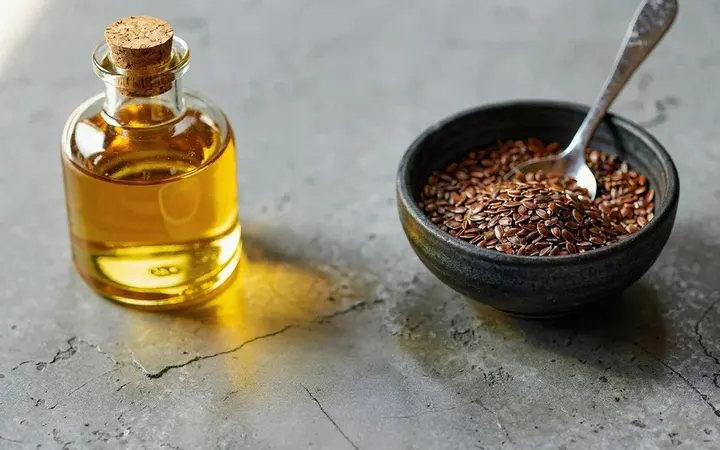
Flaxseed, chia and walnuts give you ALA, the plant form of omega-3. Your body converts only a little of it into EPA and DHA, the forms in fish. There's no official target for EPA and DHA, so an algae oil supplement is optional rather than essential. See our vegan omega-3 guide.
Usually from food: iron, calcium, zinc and protein
| Nutrient | Good plant sources | Tip |
|---|---|---|
| Iron | Lentils, beans, tofu, pumpkin seeds, oats | Eat with vitamin C; skip tea and coffee with meals |
| Calcium | Calcium-set tofu, fortified plant milk, kale, almonds | Choose plant milk "with added calcium" |
| Zinc | Beans, lentils, seeds, nuts, whole grains | Soaking and sprouting help absorption |
| Protein | Soy, lentils, beans, seitan, nuts | Add a legume to every meal |
The National Academies of Medicine set the iron target for vegetarians and vegans 1.8 times higher than the standard one, because plant iron is absorbed less well. That's a reason to plan iron-rich meals, not necessarily to supplement: too much iron can be harmful, so only take iron supplements if a blood test shows you need them. See our guides to iron-rich foods and calcium without dairy for the best sources.
Do you need a multivitamin?
Not necessarily. A B12 supplement (plus vitamin D in winter) covers the gaps for most people. A multivitamin can be convenient, but check what's in it. See Are multivitamins worth it for vegans?
How to know what you need
- Track a typical week of meals to see which nutrients your food already covers.
- Take B12 regardless.
- Ask your doctor for a blood test if you're unsure, especially for B12, iron (ferritin) and vitamin D.
- Watch the upper limits. More isn't better: supplements are the usual reason people go over the safe limit for iron, zinc or vitamin A.
Frequently asked questions
What supplements should vegans take?
Vitamin B12 is the one every vegan needs. Vitamin D is worth taking in autumn and winter if you live far from the equator. Algae oil for omega-3 is optional. Other nutrients usually come from a well-planned diet.
Should vegans take iron supplements?
Only if a blood test shows you need them. Plant foods such as lentils, beans, tofu and seeds provide iron, and too much iron from supplements can be harmful.
Can vegans take fish oil?
No, fish oil isn't vegan. Algae oil provides the same omega-3s, EPA and DHA.
Do vegans need B12 supplements?
Yes, unless they eat enough fortified foods. Plant foods don't contain reliable amounts of B12, and low B12 can cause tiredness and, over time, nerve damage.
Recipes to try

Related guides


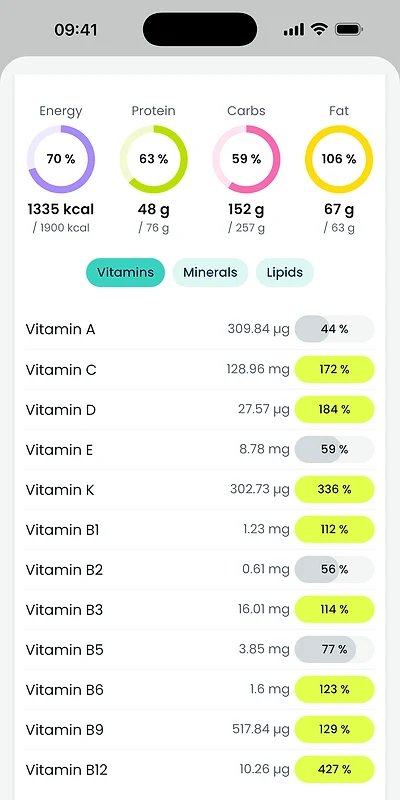
See what your food already covers
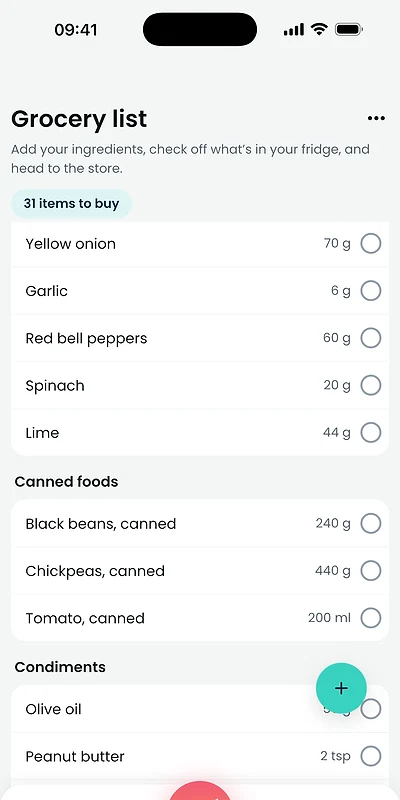
Add your supplements to Vegochef, tick them off each day, and see food and supplements together against your targets, including the upper limits.
Try it free for 7 days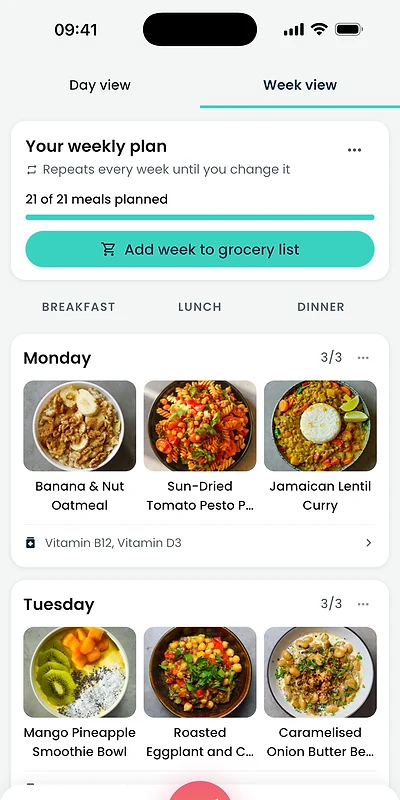
Sources
- NIH Office of Dietary Supplements: fact sheets for vitamin B12, vitamin D, omega-3, iron, calcium and zinc (ods.od.nih.gov)
- The Vegan Society: vitamin B12 recommendations (vegansociety.com)
- NHS: Vitamin D advice for adults in the UK (nhs.uk)
- National Academies of Medicine: Dietary Reference Intakes
From vegochef.com: meal planner and nutrition tracker for vegans, vegetarians and pescatarians. Free for 7 days on the App Store.