 vegochef.com/guides/greek-yogurt-protein/
How much protein is in Greek yogurt?
 By the Vegochef team · Editorial standards · Last checked · 5 min read

Greek yogurt has become a go-to protein food for vegetarians and anyone trying to eat more protein at breakfast. But "Greek" on the label can mean quite different numbers. Here's how much protein you actually get, using data from the US Department of Agriculture.
Protein in Greek yogurt
| Yogurt (plain) | Amount | Protein (approx.) |
|---|---|---|
| Greek, non-fat | 170 g (6 oz) pot | 17 g |
| Greek, non-fat | 100 g | 10 g |
| Greek, non-fat | 1 cup (245 g) | 25 g |
| Greek, whole milk | 170 g (6 oz) pot | 15 g |
| Greek, whole milk | 100 g | 9 g |
Brands vary, so check the label. "Greek-style" yogurt isn't always strained: some are thickened instead, and can have much less protein than real Greek yogurt.
High-protein Greek yogurts: some brands sell extra-strained or protein-enriched Greek yogurt with around 15–20 g of protein in a single pot. They're a convenient option; plain versions have the least added sugar.
Greek yogurt vs other yogurts
Per 100 g, plain, unsweetened:
| Yogurt | Protein per 100 g (approx.) |
|---|---|
| Skyr (Icelandic-style, strained) | about 10–11 g (check label) |
| Greek, non-fat | 10 g |
| Greek, whole milk | 9 g |
| Regular, low-fat | 5 g |
| Regular, whole milk | 3.5 g |
| Soy yogurt | about 3–4 g (check label) |
| Coconut or almond yogurt | usually under 1–2 g |
| High-protein plant yogurt (soy or pea) | varies; some reach 6–10 g |
Why Greek yogurt has more protein
Greek yogurt is regular yogurt that has been strained to remove much of the liquid whey. It takes about three to four times as much milk to make the same amount, so the result is thicker, tangier and more concentrated in protein. Straining also removes some of the milk sugar and some calcium, so Greek yogurt has a little less calcium than regular yogurt.
Is Greek yogurt a complete protein?
Yes. Like other dairy foods, it contains all nine essential amino acids. Most of its protein is casein, which is digested slowly, one reason Greek yogurt keeps you full.
For vegetarians: check for gelatin
Plain Greek yogurt is usually vegetarian, but some flavoured, low-fat or "light" yogurts use gelatin as a thickener, which comes from animals. Check the ingredient list, or look for a vegetarian label.
For vegans: plant-based options
Dairy-free yogurts have far less protein than Greek yogurt, with a few exceptions:
- Soy yogurt is the best standard option, at about 3–4 g of protein per 100 g, and it's usually fortified with calcium and often vitamin B12.
- High-protein plant yogurts made with soy or pea protein can come close to Greek yogurt. Check the label.
- Boost any plant yogurt with hemp seeds, chia, nut butter or a scoop of plant protein, as in our chia pudding with raspberries, made with soy yogurt and pea protein.
Easy ways to use Greek yogurt
- Breakfast bowl: with berries, oats or granola and seeds. See high-protein vegetarian meals for more.
- Overnight oats: stir a few spoons in for extra protein and creaminess, as in our white chocolate overnight oats.
- Instead of sour cream or mayonnaise: on chili, tacos, baked potatoes or in dressings. Try it on our loaded sweet potatoes with spiced mushrooms.
- Dips: tzatziki with cucumber, garlic and mint, or with herbs and lemon.
- Smoothies: a few spoons make them thicker and more filling.
Work out your own target with the protein calculator.
Frequently asked questions
Is Greek yogurt a good source of protein?
Yes. A 170 g pot of plain non-fat Greek yogurt has about 17 g of protein, about the same as a cup of cooked lentils, and it's a complete protein.
Why does Greek yogurt have more protein than regular yogurt?
It's strained to remove much of the liquid whey, so the same amount of yogurt is thicker and more concentrated in protein. Regular plain yogurt has about 3.5–5 g of protein per 100 g.
Does flavoured Greek yogurt have less protein?
Usually a little, because fruit and sugar take up some of the pot. Plain yogurt with your own fruit gives the most protein and the least added sugar.
Is Greek yogurt vegetarian?
Plain Greek yogurt usually is. Some flavoured or low-fat yogurts contain gelatin, which isn't vegetarian, so check the ingredients.
Is there a vegan Greek yogurt with as much protein?
Some. Regular soy and other plant yogurts have far less protein than dairy Greek yogurt, but a few Greek-style plant yogurts made with soy or pea protein come close. Check the label: values vary a lot.
Recipes to try



Related guides


See what your breakfast adds up to
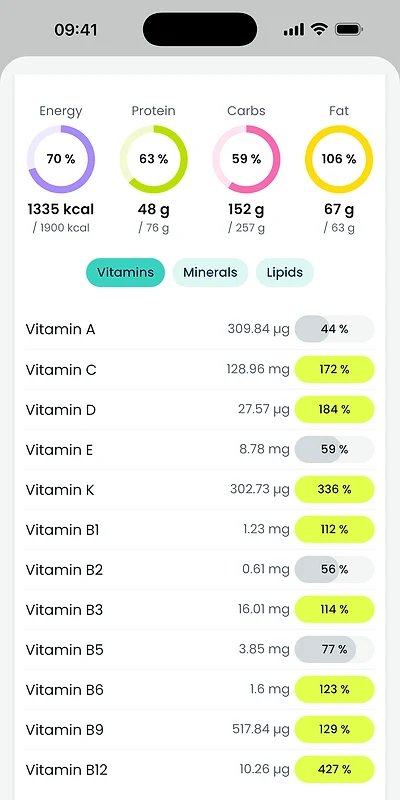
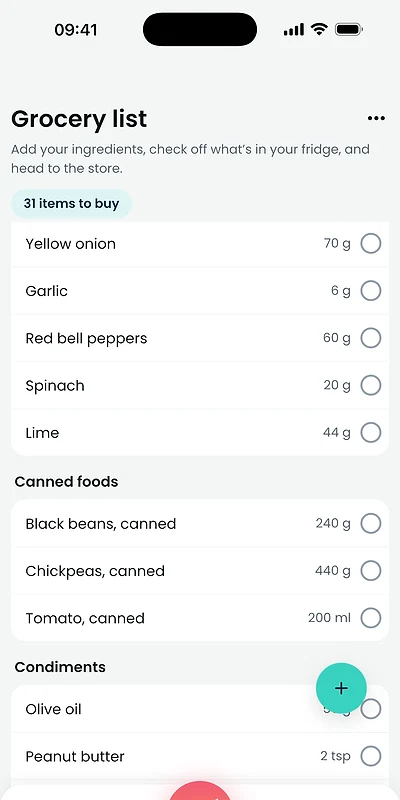
Log yogurt and the rest of your meals in Vegochef and see your protein next to 29 vitamins, minerals and lipids, including calcium and vitamin B12, against your targets.
Try it free for 7 days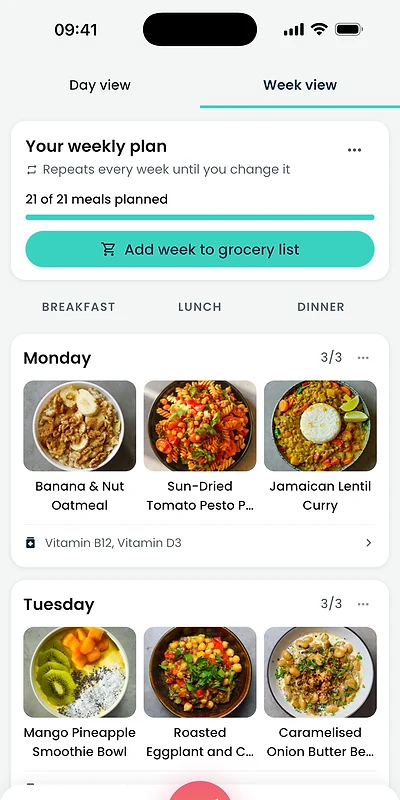
Sources
- USDA FoodData Central: yogurt, Greek, plain, nonfat; yogurt, Greek, plain, whole milk; yogurt, plain, whole milk and low fat (fdc.nal.usda.gov)
- National Academies of Medicine: Dietary Reference Intakes for protein
From vegochef.com: meal planner and nutrition tracker for vegans, vegetarians and pescatarians. Free for 7 days on the App Store.