 vegochef.com/guides/what-is-tempeh/
What is tempeh? And how to cook it
 By the Vegochef team · Editorial standards · Last checked · 7 min read
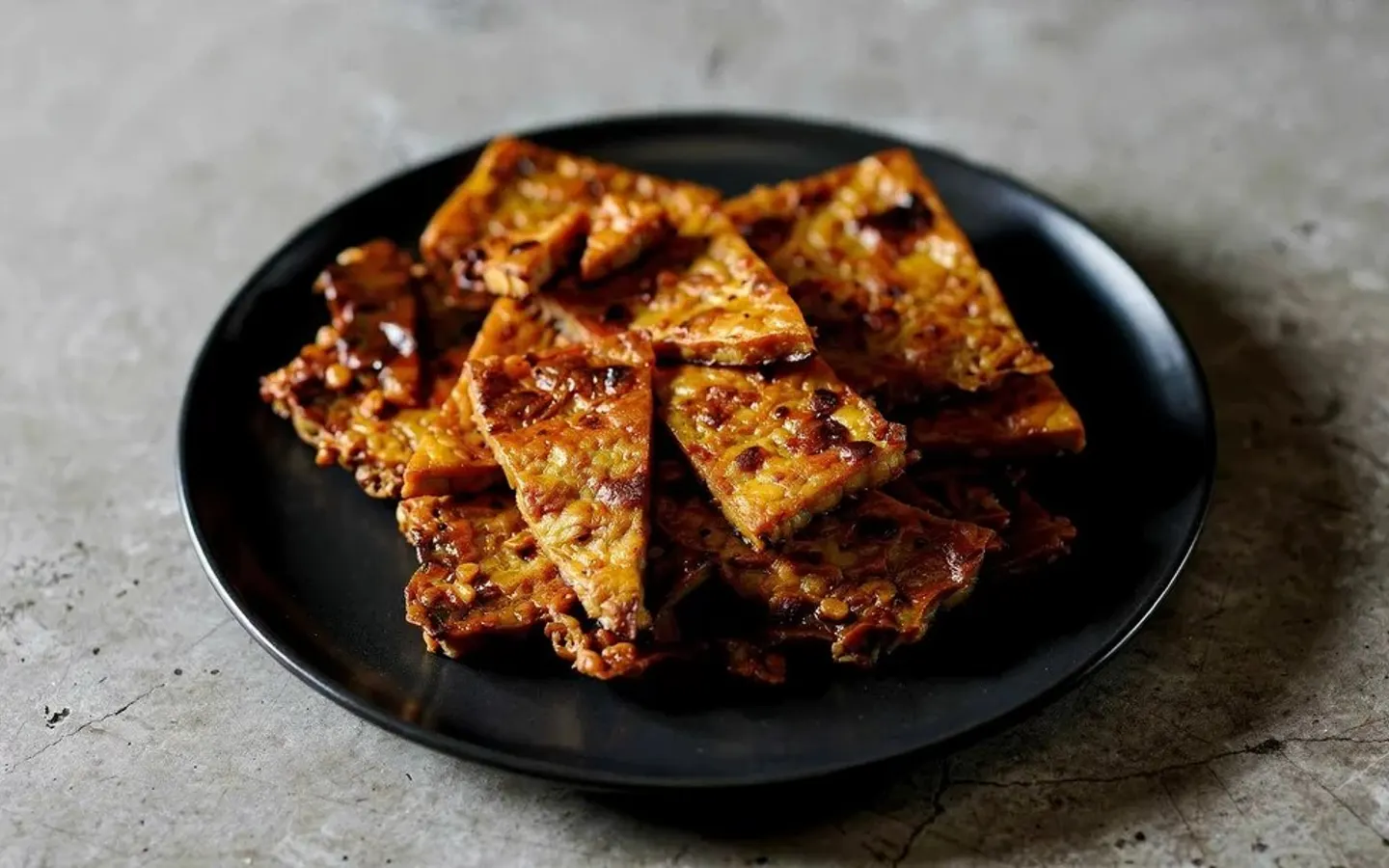
Tempeh (say "tem-pay") is one of the oldest plant proteins there is, and one of the most protein-rich. If you've only tried tofu, it's worth knowing: it's firmer, nuttier and much easier to make taste good once you know two simple tricks.
What is tempeh made of?
Tempeh is made from whole cooked soybeans that are fermented with a mould, usually Rhizopus oligosporus. Over a day or two, the mould grows a white network through the beans and binds them into a firm cake. It comes from Java, in Indonesia, where it has been eaten for centuries.
Because it's made from whole beans, not soy milk like tofu, you can see the beans in each slice. Some tempeh also includes other legumes or grains, and soy-free versions made from chickpeas or other beans exist.
What does it taste like?
Nutty, earthy and savoury, with a slightly mushroomy note and a firm, chewy bite. Plain tempeh straight from the pack can taste a little bitter. Steaming it first and using a bold marinade (soy sauce, garlic, maple syrup, lime, smoked paprika) turns it into something most people love.
Tempeh nutrition
Per 100 g, from USDA FoodData Central:
| Nutrient | Tempeh, 100 g |
|---|---|
| Energy | about 190 kcal |
| Protein | about 20 g |
| Fat | about 11 g |
| Carbohydrate | about 8 g |
| Calcium | about 110 mg |
| Iron | about 2.7 mg |
It also provides magnesium, phosphorus and manganese. Like other soy foods, tempeh is a complete protein. A typical 100 g serving covers more than a third of what a 70 kg adult needs in a day; check your own target with the protein calculator.
Tempeh vs tofu
| Tempeh | Tofu (firm) | |
|---|---|---|
| Made from | Whole soybeans, fermented | Soy milk, curdled and pressed |
| Protein per 100 g | about 20 g | about 15 g |
| Texture | Firm, chewy, grainy | Smooth; silken to extra-firm |
| Taste | Nutty, earthy | Very mild, takes on flavours |
| Best for | Tacos, bowls, smoky strips, sandwiches, crumbles | Stir-fries, scrambles, soups, desserts |
Tofu is just as useful: see our guide on how to cook and press tofu.
How to cook tempeh
1. Steam or simmer first (optional, recommended)
Cut the block into slices, cubes or crumbles. Steam or simmer in water for 10 minutes, then drain. This softens bitterness and helps the marinade soak in.
2. Marinate
At least 15 minutes, or overnight in the fridge. A simple marinade for one 200 g block: 3 tbsp soy sauce, 1 tbsp maple syrup, 1 tbsp lime juice or rice vinegar, 1 grated garlic clove and a little oil.
3. Cook
- Pan-fry: slices or cubes in a little oil over medium-high heat, 3–4 minutes per side until golden. Pour in the leftover marinade at the end so it glazes.
- Bake: on a lined tray at 200 °C (400 °F) for 20–25 minutes, turning once.
- Crumble: break it up with your hands and fry until golden for tacos, chili, bolognese or a ragù.
- Grill or air-fry: thick slices brushed with marinade, 10–12 minutes in an air fryer at 200 °C (390 °F).
Ideas for using tempeh
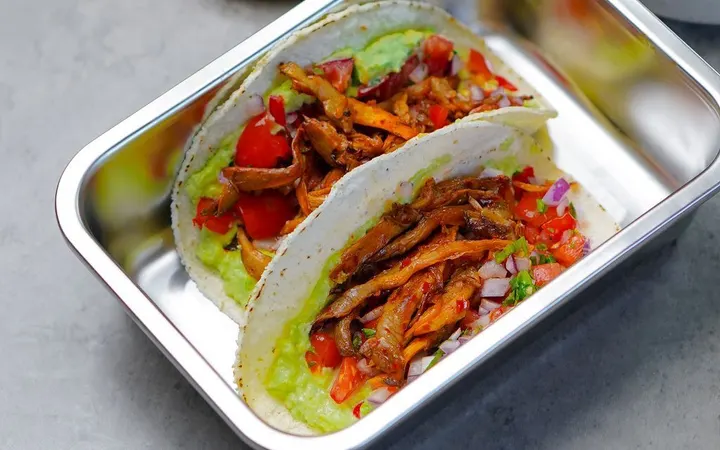
- Tacos: crumbled, with chipotle, cumin and lime, or as a swap in our oyster mushroom tacos.
- Bowls: glazed slices over rice or quinoa with greens and a peanut sauce. See how to cook quinoa.
- Smoky tempeh strips: thin strips in soy sauce, maple syrup and smoked paprika, fried until crisp, in a sandwich with lettuce and tomato.
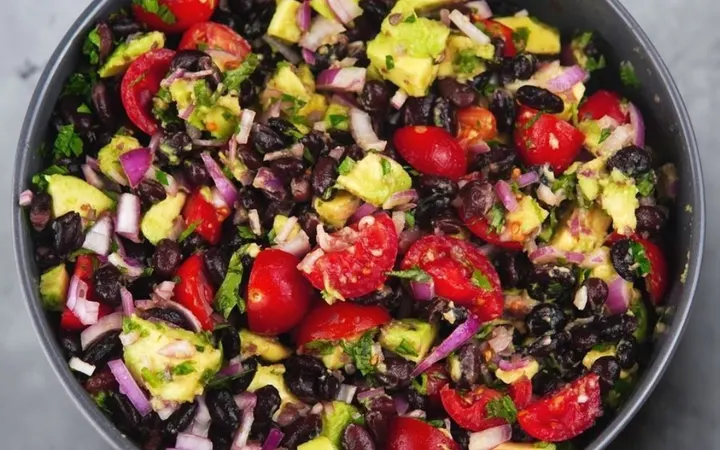
- Salads: baked cubes on our black bean and avocado salad.
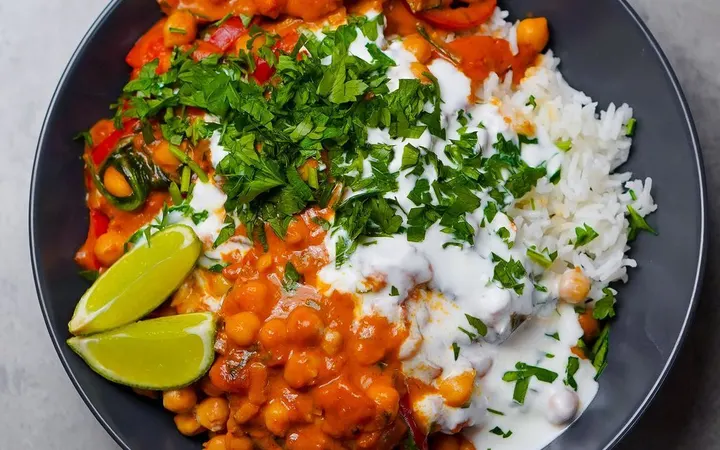
- Curries and stews: cubes simmered in a curry sauce instead of chickpeas, as in our chickpea curry.
Buying and storing
Find tempeh in the chilled section near the tofu. Keep it in the fridge and use it by the date on the pack; once opened, wrap it and use within about 5 days. It freezes well for up to 3 months: thaw in the fridge before cooking.
More plant protein ideas: high-protein vegan meals and how much protein is in seitan.
Frequently asked questions
What does tempeh taste like?
Nutty, earthy and a little mushroomy, with a firm, chewy bite. Some blocks taste slightly bitter; steaming or simmering for 10 minutes before marinating softens that.
Is tempeh healthier than tofu?
Both are healthy. Tempeh has more protein (about 20 g vs 15 g per 100 g) and fibre because it's made from whole soybeans, and it's fermented. Tofu has fewer calories and is more versatile in texture.
Do you have to steam tempeh?
No, but it helps. Steaming or simmering for about 10 minutes softens any bitterness and opens the tempeh up so it soaks up marinade better.
Can you eat tempeh raw?
Most store-bought tempeh is pasteurised, but it's usually cooked before eating, both for taste and for food safety. Cook it until it's hot all the way through.
What are the black or white spots on tempeh?
White, fuzzy coating and some black or grey spots are the normal mould that makes tempeh. Throw it out if it's slimy, smells of ammonia or has pink, yellow or green spots.
Is tempeh gluten-free?
Plain soy tempeh is naturally gluten-free, but some brands add grains such as barley. Check the label if you need to avoid gluten.
Recipes to try
Related guides


See what tempeh adds to your day
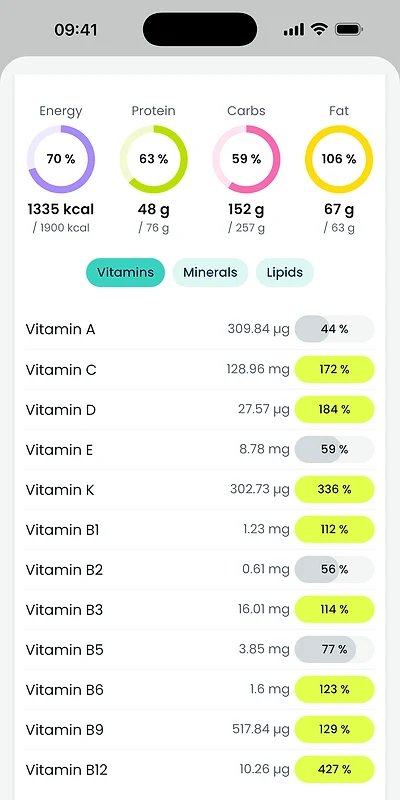
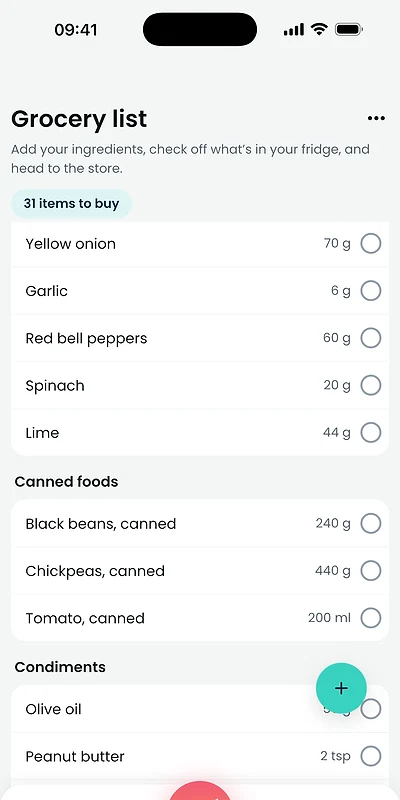
Log tempeh in Vegochef and see your protein next to 29 vitamins, minerals and lipids, including iron and calcium, against your targets.
Try it free for 7 days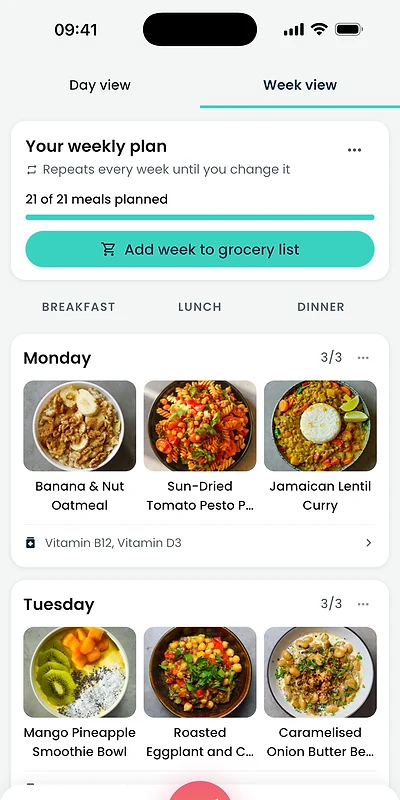
Sources
- USDA FoodData Central: tempeh; tofu, raw, firm (fdc.nal.usda.gov)
- Encyclopaedia Britannica and the Indonesian Tempe Movement: history of tempeh
- USDA FoodKeeper: soy products, storage times (foodsafety.gov)
From vegochef.com: meal planner and nutrition tracker for vegans, vegetarians and pescatarians. Free for 7 days on the App Store.